A DIY website can be a sensible starting point for a business that needs a few public pages and a contact route. Custom development is worth considering when visitors or staff need to complete tasks that the existing setup handles awkwardly. Start by identifying the missing function rather than assuming every website needs rebuilding.
A simple information site can suit a website builder
If the website mainly explains services, displays photographs, and provides contact details, a builder may cover the task. The business still needs accurate content, suitable images, and someone who can keep the information current. A template does not make those decisions for you.
An existing booking or ordering service may also meet a straightforward need. Check how it fits the website and your daily process before commissioning a replacement. A useful custom build should have a clear job that the current tools are not performing well.
Custom development can connect the public site to daily work
A custom website can connect visitor actions to a defined business workflow. An appointment request might need treatment details, a staff review, and an accepted or declined status. Editable service information and staff controls may also need rules that match how the business operates.
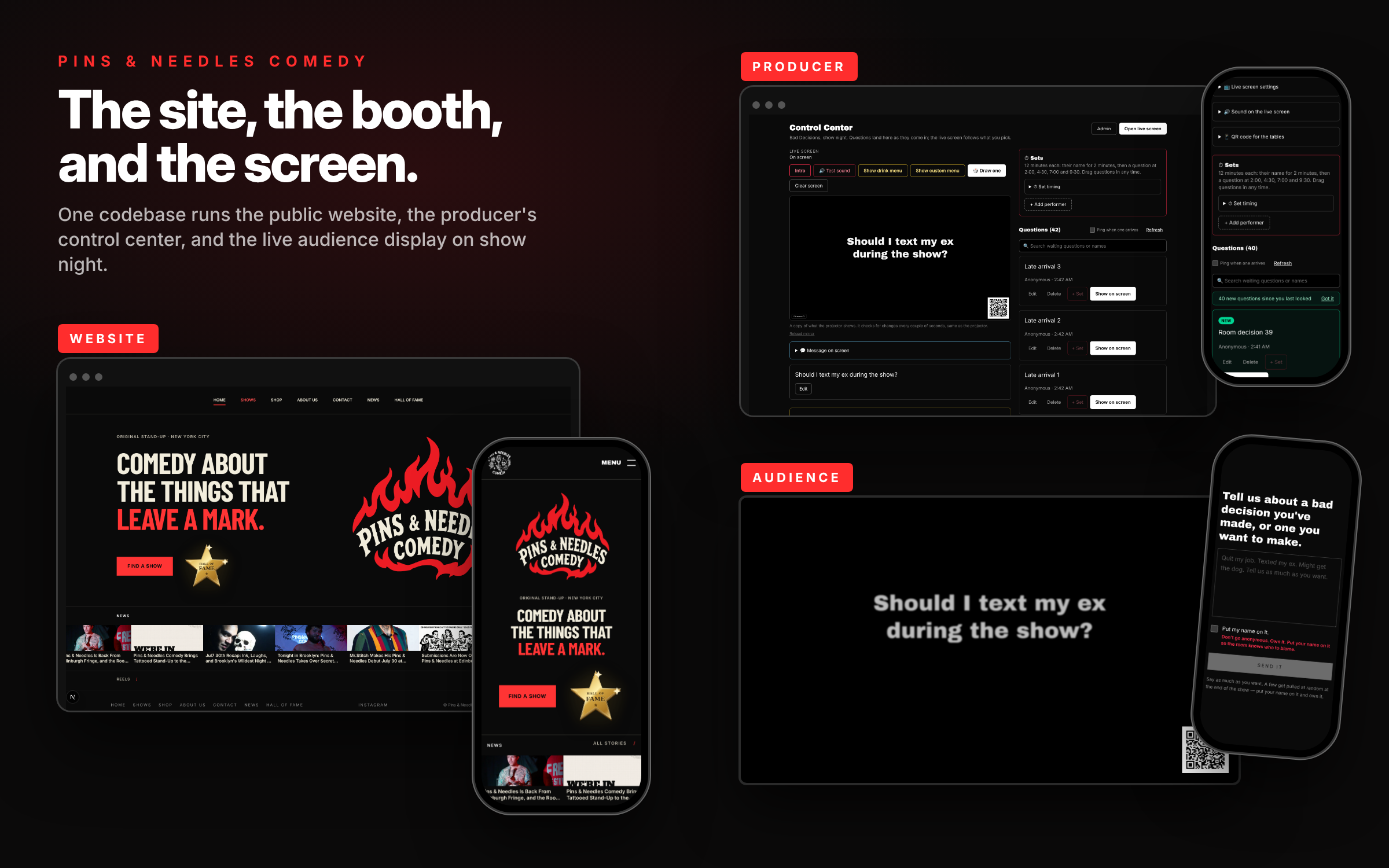
Pins & Needles Comedy connects public pages with audience submissions and producer controls. That portfolio example shows how a website can include operational functions alongside its public information. It is not a salon client project or a claim about measured sales results.
Plan the parts that need changing
Bring the existing website and show where people get stuck. We can review its useful content, contact steps, editing process, and connected services. Some parts may remain while a particular workflow or public section is rebuilt. The scope should explain those boundaries.
Compare the build cost with the responsibilities that follow it. Hosting, editing access, external services, and maintenance all need a plan. Page structure and metadata can be improved as part of a website project, but search placement and new customer inquiries cannot be guaranteed.
A few useful answers
Do I need to replace my whole website?
Not necessarily. We can identify which content and functions still work, then scope the parts that need changing. Access to the current setup and any connected services affects what can be retained or integrated.
What makes a custom website worth discussing?
A specific problem is a useful starting point: an awkward booking process, confusing pages, difficult editing, or information that needs moving between tools. Explain the current task and what should happen instead.